


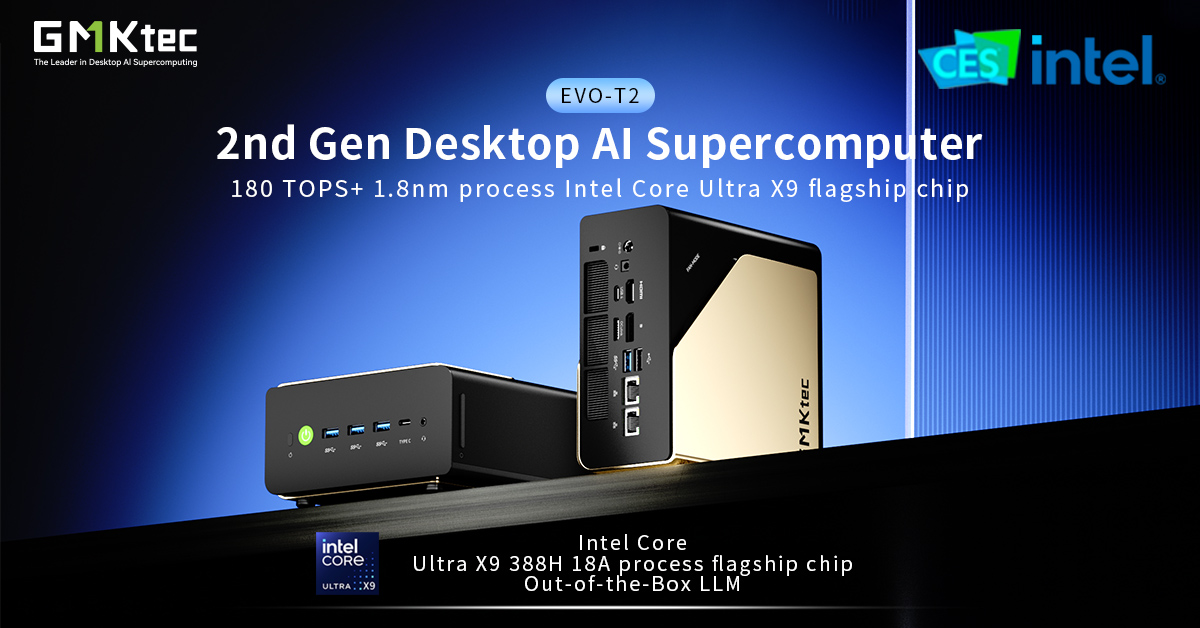
(Las Vegas, January 5, 2026) — CES 2026, the global barometer of the consumer electronics industry, has officially opened. GMKtec, a pioneer in desktop AI supercomputing, made a headline-grabbing appearance with the global debut of its flagship product, EVO-T2, instantly becoming one of the show’s focal points through uncompromising innovation.
As the world’s first device powered by Intel’s 2026 flagship mobile consumer processor, the Core™ Ultra X9 388H, EVO-T2 is built on Intel’s cutting-edge 18A (1.8 nm) process technology. Delivering up to 180 TOPS of local AI computing performance, EVO-T2 redefines the upper limits of desktop-class AI computing.
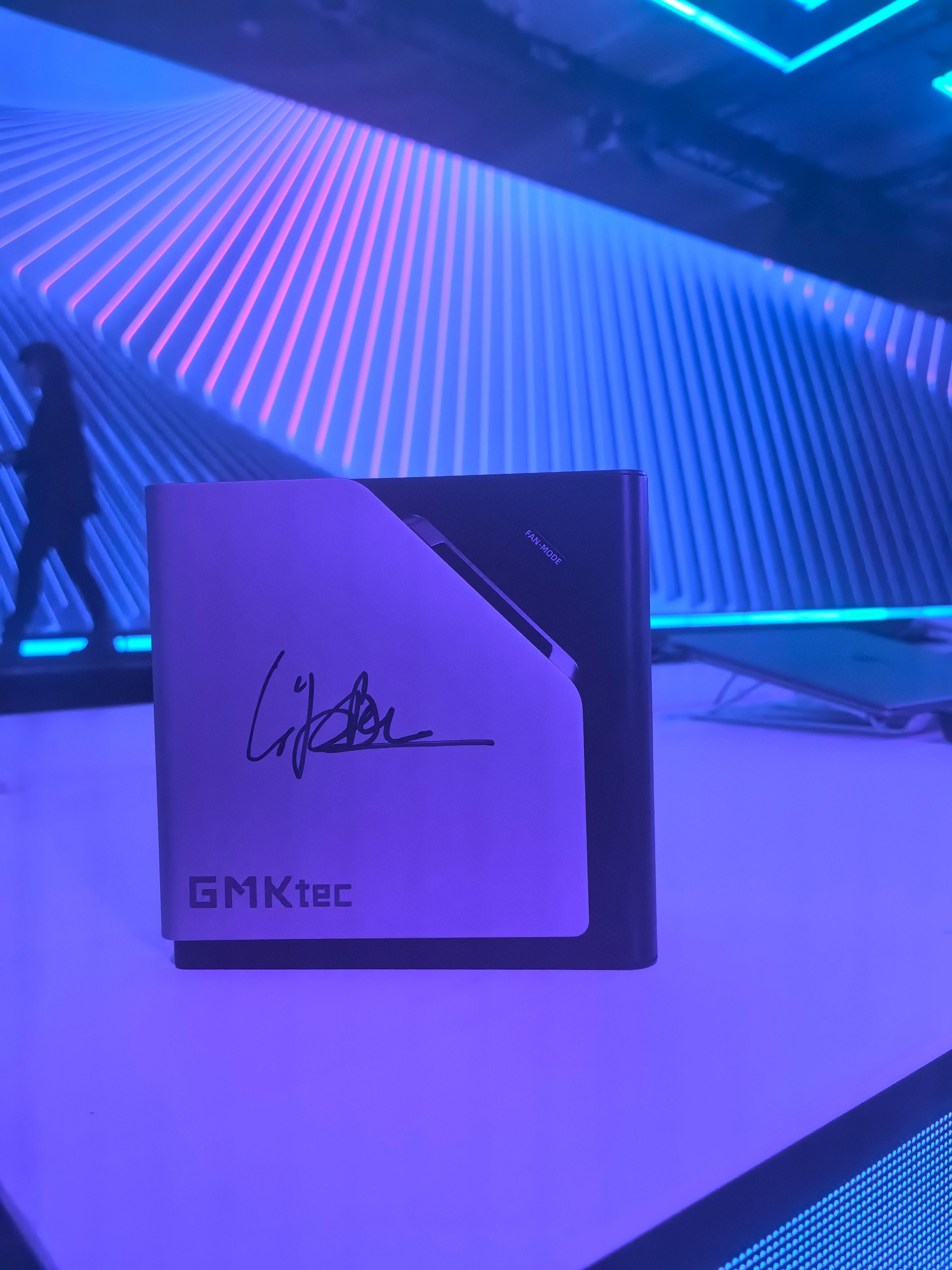
At the exhibition, Intel CEO Mr. Lip-Bu Tan, a legendary leader in the global semiconductor industry, personally visited the GMKtec booth. After experiencing the exceptional performance of EVO-T2 firsthand, he spoke highly of the product and personally signed the EVO-T2 prototype—a milestone moment that marks GMKtec’s breakthrough achievements in the desktop AI supercomputing arena.
18A Process Empowerment: Redefining the Ceiling of AI Computing
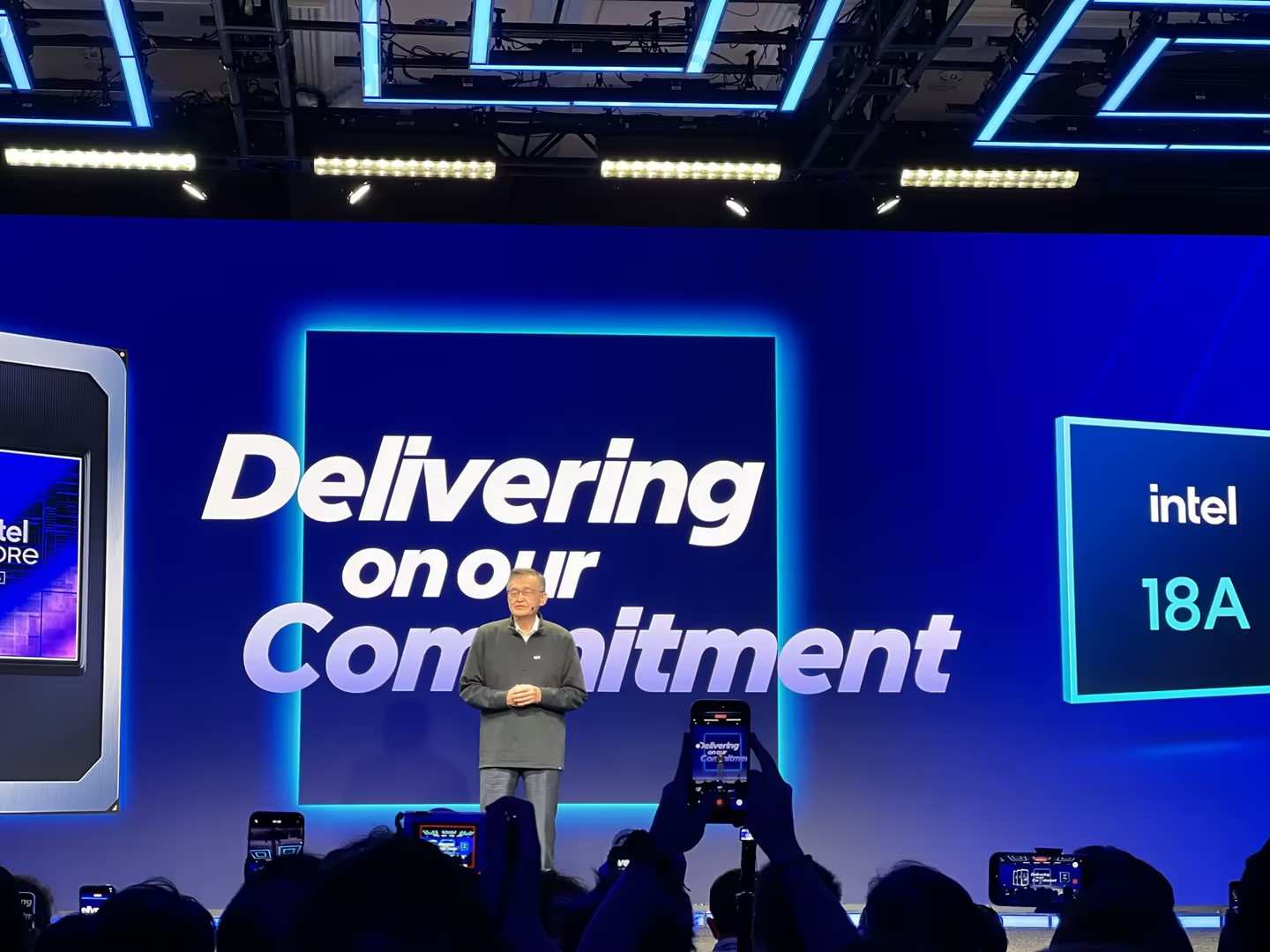
Intel CEO Lip-Bu Tan stated that Intel has fulfilled its commitment by shipping its first Intel 18A product, Panther Lake, on schedule before the end of 2025, with all three packaging technologies used by Panther Lake now in production.
The core breakthrough of the GMKtec EVO-T2 lies in its adoption of Intel’s milestone processor under the “Five Nodes in Four Years” strategy—the flagship Core™ Ultra X9 388H, based on the Panther Lake architecture. Manufactured using Intel’s most advanced 18A process, the processor integrates two revolutionary technologies: RibbonFET gate-all-around transistors and PowerVia backside power delivery, achieving a dual leap in both performance and energy efficiency.
RibbonFET technology surrounds the current channel on all four sides, significantly enhancing transistor switching precision and responsiveness while effectively reducing leakage. PowerVia technology decouples power delivery from signal routing, substantially improving chip density and power stability, while reducing voltage drop by approximately 30%.
180 TOPS of AI Power: Local Generative AI Without Compromise
Leveraging these advanced process and architectural advantages, the EVO-T2 platform delivers up to 180 TOPS of AI performance, enabling seamless local deployment of multimodal generative AI and smooth operation of large-scale AI models with tens of billions of parameters.
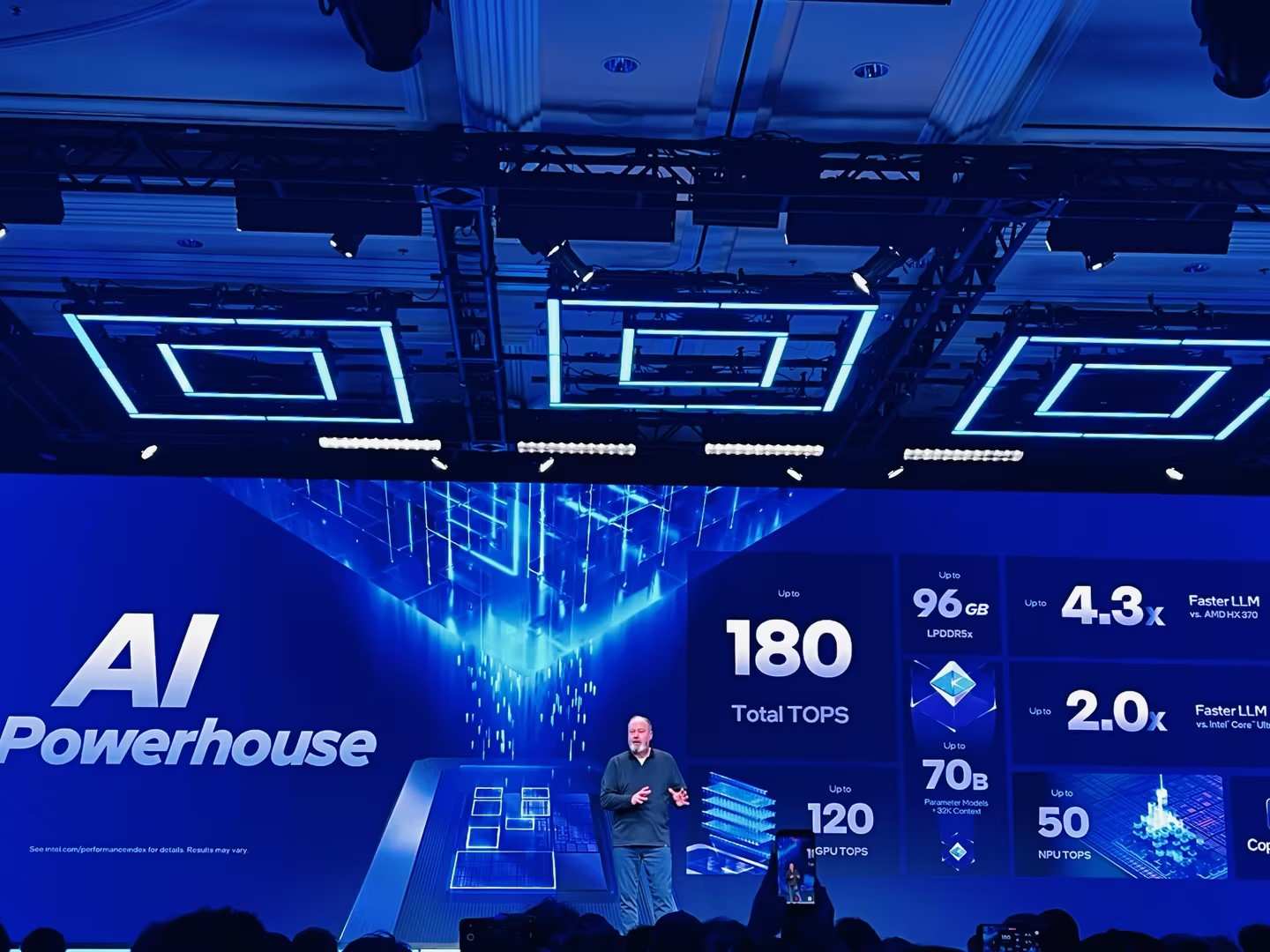
For developers and creative professionals, EVO-T2 functions as a low-latency, privacy-first “pocket AI computing center.” Official data shows:
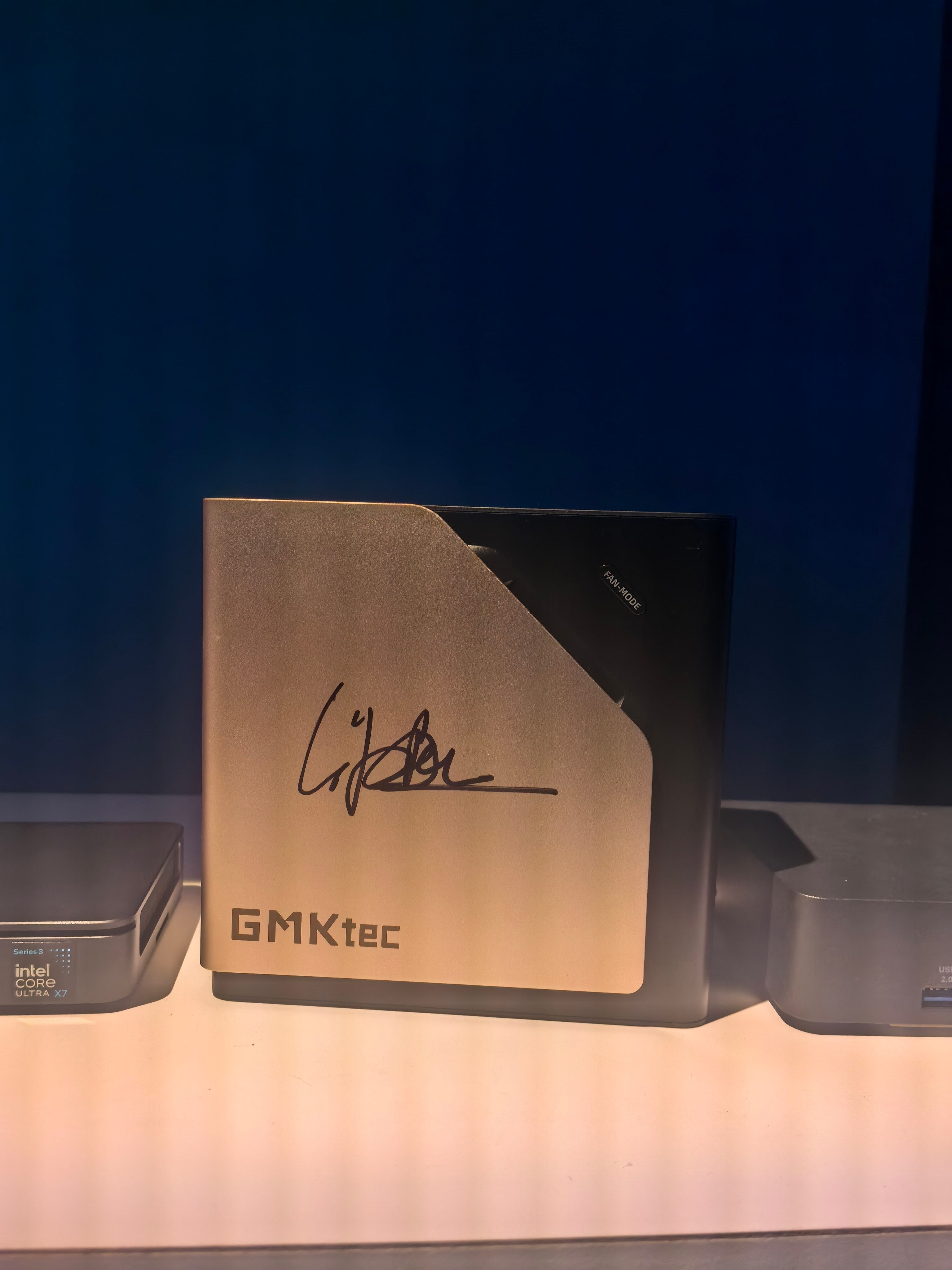
Single-thread performance improves by over 10% compared to the previous generation
Power consumption is reduced by more than 40% at equivalent performance levels
Graphics performance sees a 50% uplift over the previous Lunar Lake platform
Paired with XeSS 3.0 multi-frame generation, EVO-T2 achieves up to 120 FPS high-refresh experiences with only a 3 ms increase in latency, striking an ideal balance between professional creation and high-definition entertainment.
Flagship Hardware, Fully Loaded: Performance Meets Expandability
As a true flagship, GMKtec EVO-T2 features a comprehensive hardware upgrade that balances extreme performance with flexible expansion, meeting the diverse needs of professional users:
Memory: Supports up to 128GB LPDDR5x high-frequency memory, providing massive bandwidth and capacity for multitasking and large-model inference
Storage Expansion: Dual PCIe 5.0 + PCIe 4.0 M.2 slots, supporting up to 16TB of total storage for ultra-fast access and massive data workloads
Connectivity: Equipped with 2.5G and 10G Ethernet, a full-featured USB4 port (40Gbps data transfer and 100W PD), and an OCuLink external GPU interface; supports quad 4K display output, enabling extensive professional peripheral expansion
Power Configuration: Supports up to 80W dynamic TDP, with a default 45W balanced mode, allowing flexible tuning between peak performance and energy efficiency across different usage scenarios
In terms of design, EVO-T2 continues GMKtec’s signature compact, squared form factor. Precision surface finishing, combined with scientifically optimized ventilation and airflow design, ensures thermal stability under sustained high-performance workloads while maintaining a clean, minimalist desktop aesthetic.

Industry Leader Endorsement: A Defining Milestone
At the launch event, Intel CEO Lip-Bu Tan personally visited the GMKtec booth and experienced EVO-T2 up close, offering high praise for its performance.
As a globally recognized semiconductor leader with decades of industry experience, Mr. Tan remarked:
“As the world’s first flagship consumer device to bring Intel’s 18A process from the laboratory to the desktop, the GMKtec EVO-T2 represents a critical step in making high-performance AI computing accessible at the desktop level. It sets a new benchmark for compact, high-efficiency system design.”
Following his remarks, Mr. Tan signed the EVO-T2 prototype in person, formally recognizing the product’s industry-level significance.
Far-Reaching Industry Impact: Accelerating the Adoption of AI PCs
The launch of EVO-T2 represents more than a performance breakthrough in the mini PC category—it carries profound industry implications:
- As the world’s first consumer mini PC based on the 18A process, EVO-T2 accelerates the real-world deployment of advanced semiconductor manufacturing, extending Moore’s Law into consumer electronics
- Marks the arrival of the “second generation of desktop AI supercomputers”in the mini PC segment, bringing server-class AI performance to personal desktops and lowering the barrier to AI adoption
- As a core partner within the Intel ecosystem, GMKtec introduced EVO-T1 in 2025, enabling dual-system local AI collaboration. In 2026, this partnership further deepens technological synergy with global semiconductor leaders, highlighting the innovation and ecosystem integration capabilities of Chinese hardware brands.
Executive Commentary
Jim Johnson
Senior Vice President, Intel
General Manager, Client Computing Group
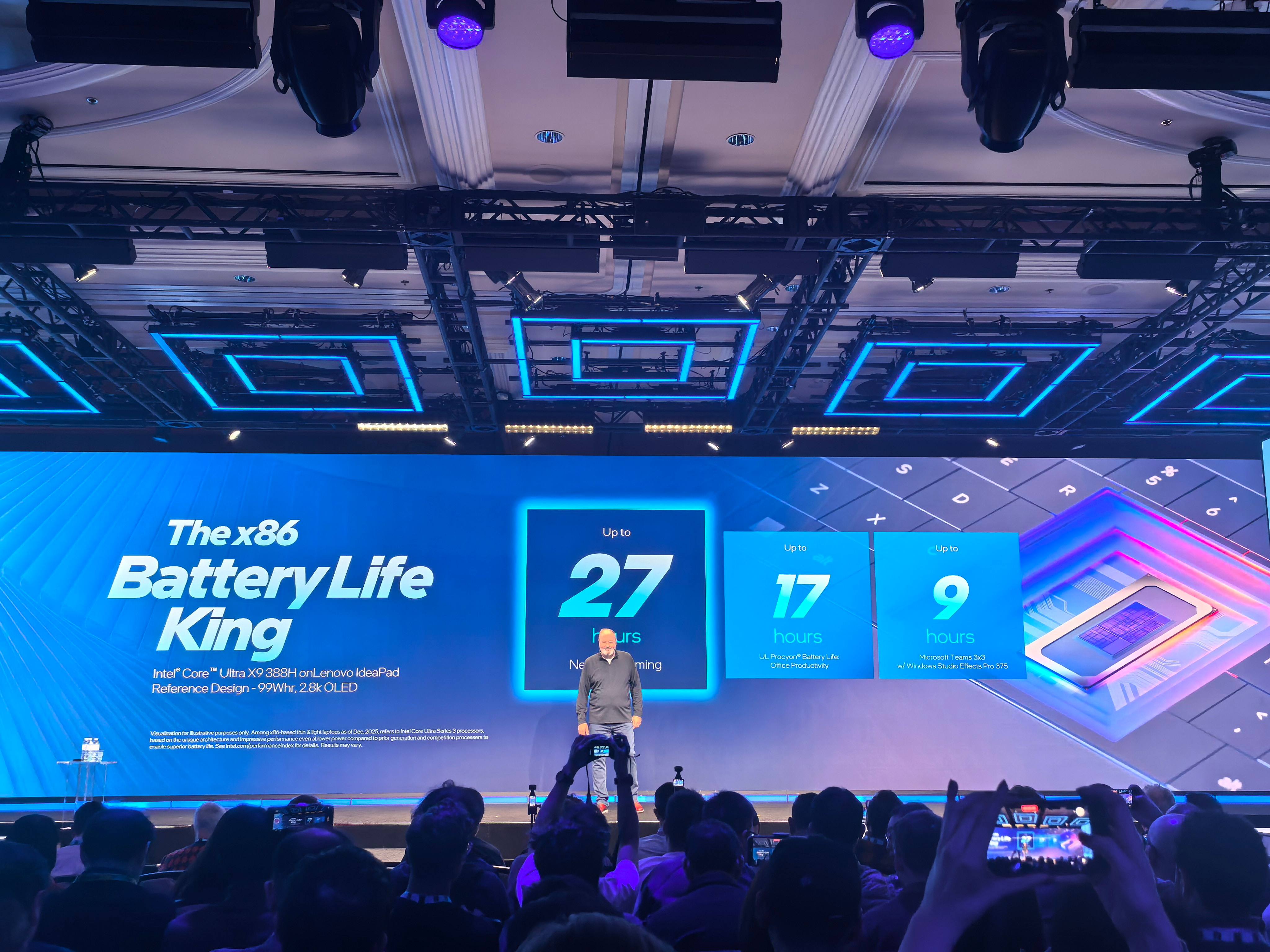
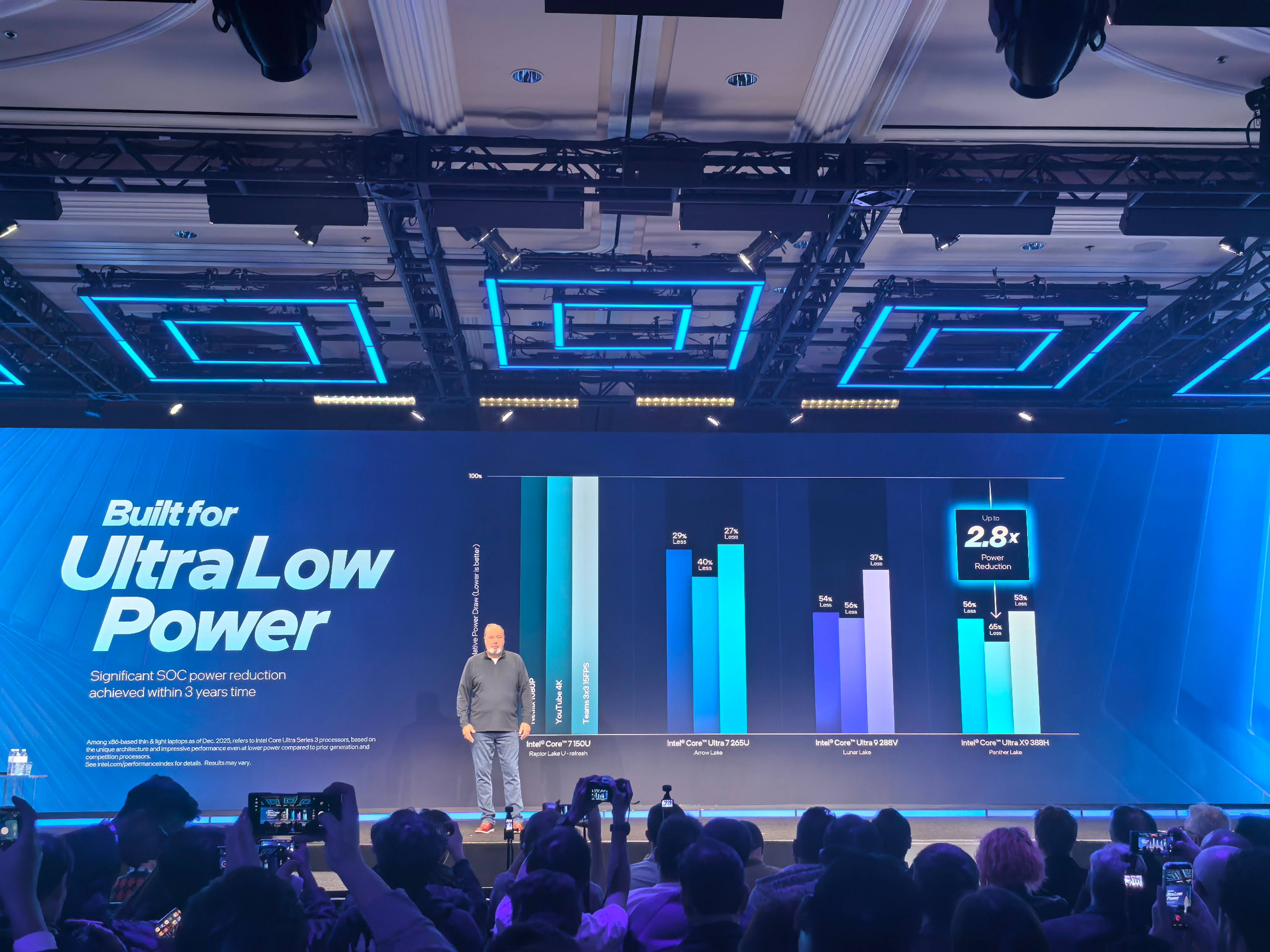
“With the Series 3 processors, we focused on improving energy efficiency, enhancing CPU performance, and integrating industry-leading GPUs. This delivers outstanding local AI capabilities alongside reliable x86 application compatibility—forming a solid foundation for the next generation of AI PC experiences.”
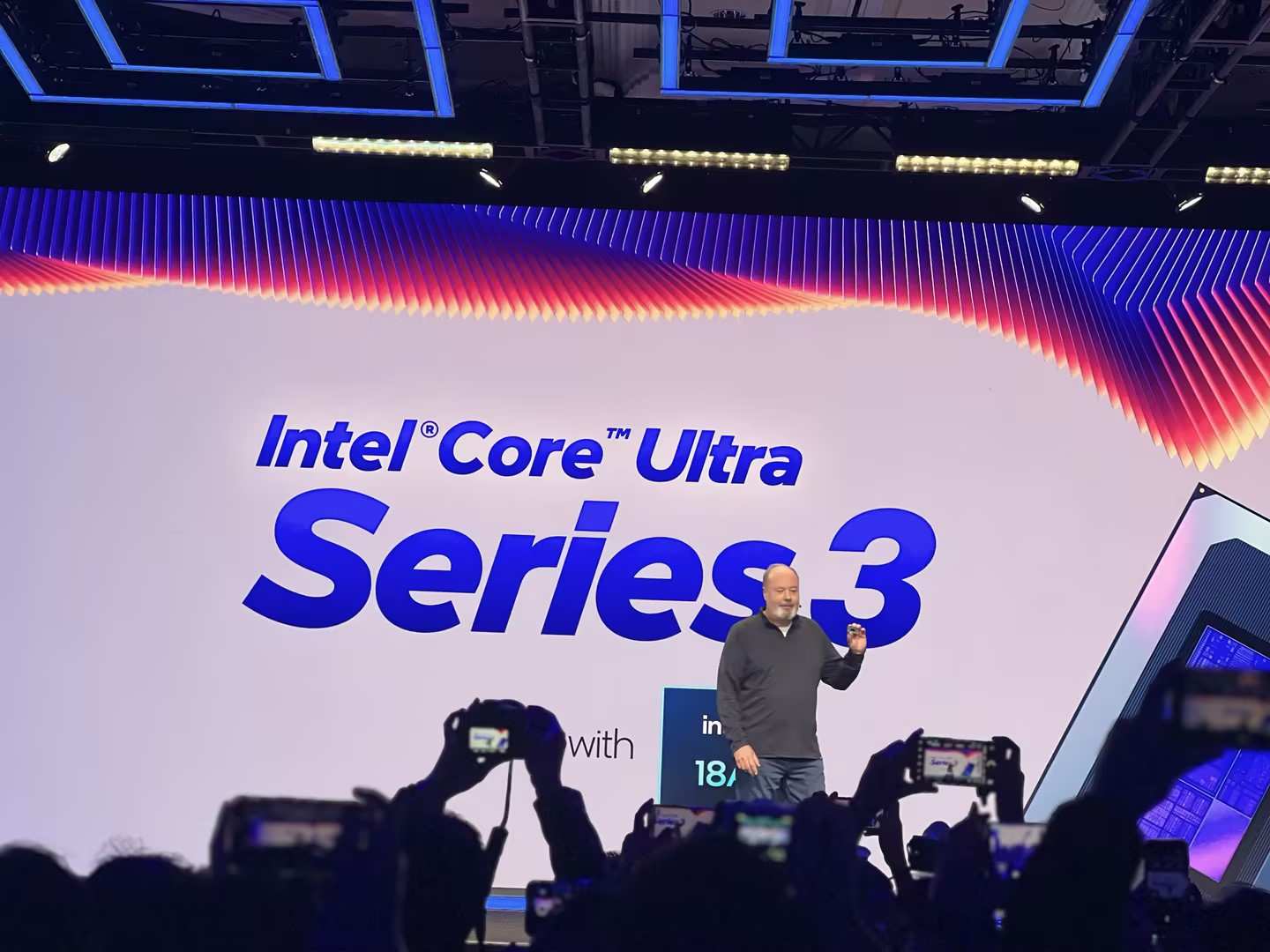
Intel CEO Lip-Bu Tan’s Hand-Signed Endorsement at CES 2026 (On-Site Photos)
The new flagship integrated GPU is branded Intel® Arc™ B390, featuring 12 Xe cores based on the latest Xe3 architecture. Notably, it is not part of the Celestial architecture, but an extension of Battlemage.
The Core™ Ultra X9 388H and Core™ Ultra X7 368H processors are equipped with this GPU, while the Core™ Ultra 5 338H features the Arc™ B370 with 10 Xe cores. Most other models will use integrated GPUs with 4 Xe cores, while two processors ending in “2” are equipped with only 2 Xe cores.
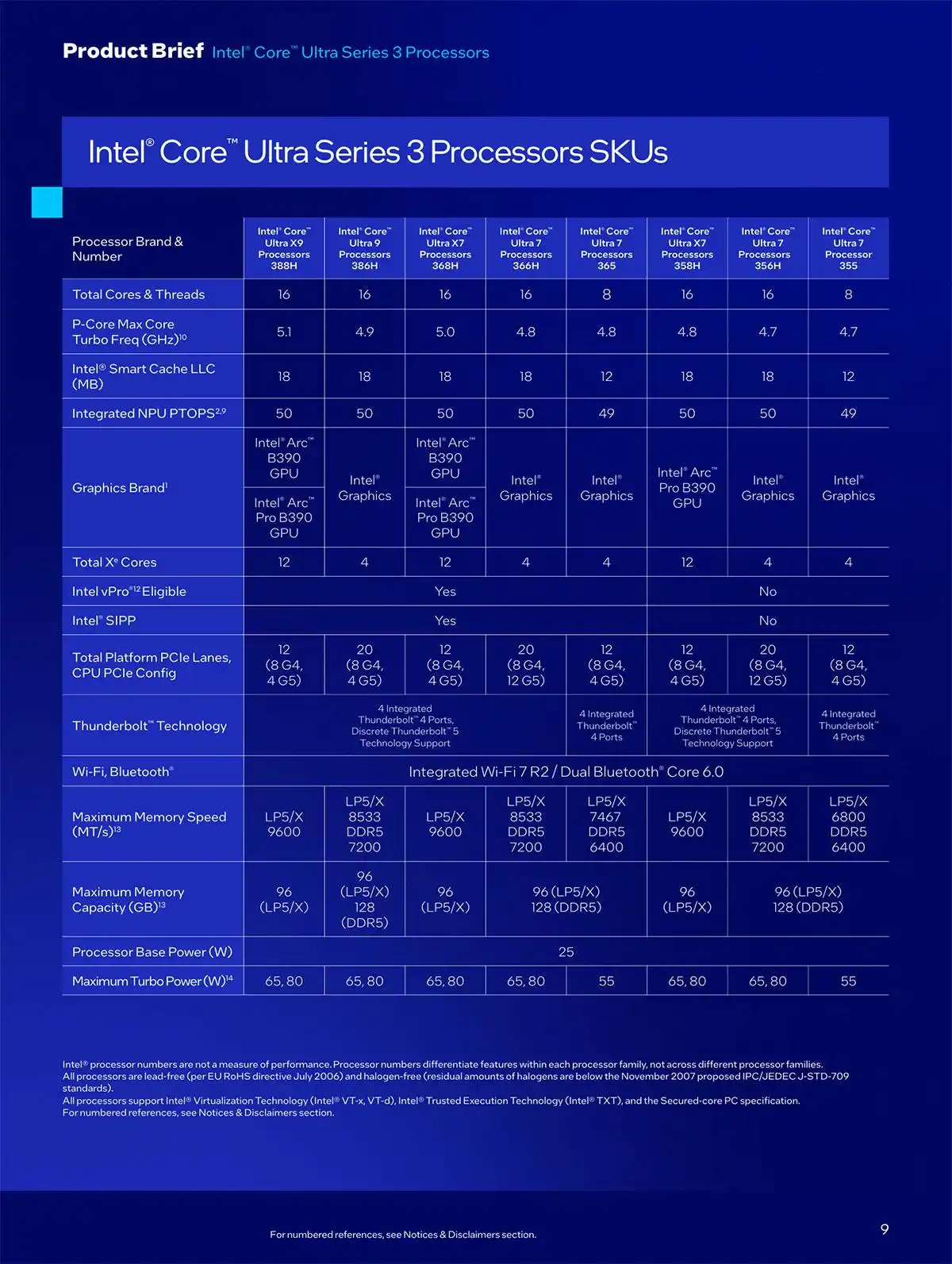
According to Intel’s official data, at the same 45W TDP, the Arc™ B390 delivers:
76% higher performance than the previous Arc™ 140T
82% higher performance than the competitor’s 53W Ryzen™ HX 370 with Radeon™ 890M at native resolution
73% higher performance with upscaling enabled
Overall performance is comparable to a discrete NVIDIA RTX™ 4050 GPU.
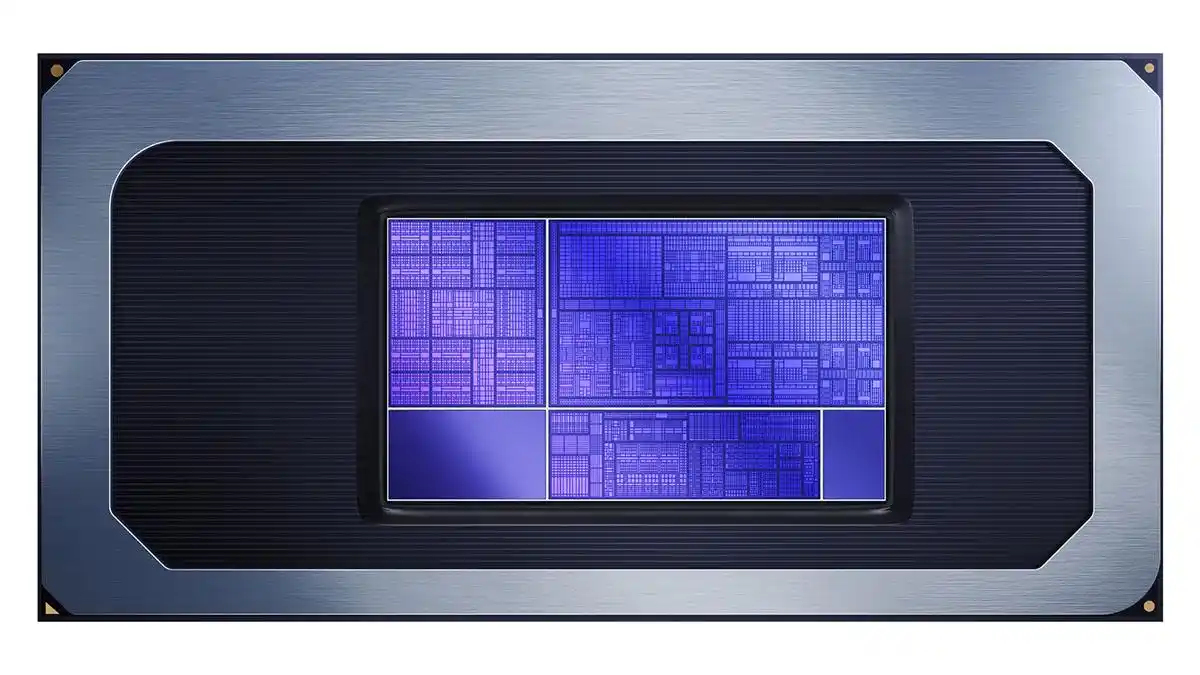
3rd-Gen Intel Core™ Ultra Processor Overview
The 3rd-generation Intel Core™ Ultra processors are offered in three configurations:
16 cores: 4P + 8E + 4 LP-E
12 cores: 4P + 4E + 4 LP-E
8 cores: 4P + 4 LP-E
The flagship P-cores boost up to 5.1 GHz.
H-series models support a maximum turbo power of 65W, while non-H models reach 55W.
All models share a 25W base TDP.
In terms of expandability:
Memory support reaches up to LPDDR5x-9600, varying by model
PCIe configurations include 12 lanes PCIe 5.0 + 8 lanes PCIe 4.0, or 4 lanes PCIe 5.0 + 8 lanes PCIe 4.0
All processors natively support four Thunderbolt™ 4 ports
Availability
GMKtec EVO-T2 is scheduled for official release in Q1 2026.
Further details regarding configurations and pricing will be announced ahead of launch. Users can stay updated via the GMKtec official website (www.gmktec.com) and authorized global distributors.
About GMKtec
GMKtec is a national high-tech enterprise specializing in the integrated R&D, manufacturing, and global sales of desktop AI supercomputing centers, mini PCs, and intelligent computing terminals. The GMKtec brand has been awarded the title of “Shenzhen Well-Known Brand,” alongside industry leaders such as Huawei and DJI, reinforcing Shenzhen’s reputation as a global innovation hub.
In 2025, GMKtec received the Platinum Award at the American Design Award and the Gold Award at the French Design Award, marking the first time a Chinese desktop AI supercomputing product achieved such international recognition.
With a fully integrated model of in-house R&D, manufacturing, branding, and global sales, GMKtec has established a leading position in the global mini PC industry and pioneered the concept of the Desktop AI Supercomputing Center. The team comprises industry experts with over 20 years of experience in electronic product design, manufacturing, and brand development.
GMKtec maintains strategic partnerships with Intel, Microsoft, AMD, and other global technology leaders. Its Longhua Industrial Base, operational since 2019, supports the entire value chain from R&D and testing to logistics and global distribution. GMKtec products are now sold in over 70 countries, with sales and service networks in more than 35 markets, consistently ranking among the top three brands on major cross-border e-commerce platforms.
About Intel
Founded in 1968 by Gordon Moore and Robert Noyce in Silicon Valley, Intel Corporation is a global leader in the semiconductor industry. Built on the x86 architecture, Intel’s core businesses span client computing, data centers, and AI chips, driven by its IDM 2.0 strategy and advanced manufacturing leadership.
Intel’s 18A (1.8 nm) process, integrating RibbonFET and PowerVia technologies, provides foundational support for AI and high-performance computing. As a key provider of AI computing power, Intel focuses on inference markets, collaborates closely with partners such as NVIDIA, and has maintained a deep presence in China for over 40 years with more than 15,000 partners worldwide.
About Lip-Bu Tan
Mr. Lip-Bu Tan is one of the most influential Chinese leaders in the global semiconductor industry. Born in 1959 to a Chinese family in Malaysia, he holds a Bachelor’s degree in Physics from Nanyang Technological University, a Master’s degree in Nuclear Engineering from MIT, and an MBA from the University of San Francisco.
In 1987, he founded Walden International, leading investments in over 120 semiconductor companies, including SMIC and AMEC, becoming a vital bridge between the U.S. and Chinese semiconductor ecosystems. From 2009 to 2021, he served as CEO of Cadence Design Systems, doubling revenue and driving a 3,200% increase in stock price.
In March 2025, Mr. Tan became CEO of Intel, the first Chinese CEO in the company’s 57-year history, spearheading strategic transformation with a focus on AI and foundry services. A recipient of the Robert N. Noyce Award, he is widely regarded as a key architect of the modern global semiconductor landscape.


