


When Jensen Huang walked onto the GTC 2025 stage in San Jose, NVIDIA unveiled its DGX™ personal AI supercomputer—built on the Grace Blackwell platform and compact enough to resemble a mini PC. Capable of training trillion-parameter models on the desktop, it showcased the industry's ultimate vision of "extreme compute density."
Around the same time, GMKtec’s EVO-X2 pushed local inference into new territory, successfully running a 235B-parameter model with its 126 TOPS Ryzen AI Max+ 395 platform, marking a turning point for the mini-computer category.
To understand the significance of today’s desktop AI breakthroughs, we must look back over five decades—from the room-sized DEC minicomputers of the 1960s to the palm-sized AI supercomputers that will redefine 2025.
NVIDIA DGX Spark

GMKtec EVO-X2


1. The First Breakthrough (1960s–1970s): Computing Power Leaves the Server Room
In the mainframe era, computers were massive, expensive, and exclusive to governments and top universities. That changed when DEC launched the PDP-1 in 1960—a cabinet-sized minicomputer delivering unprecedented affordability and accessibility.
The true milestone arrived in 1965 with the PDP-8, widely regarded as the first modern “minicomputer.” It enabled real-time industrial control, medical diagnostics, and laboratory computing, granting researchers the freedom to compute without waiting in mainframe queues.
By 1970, the PDP-11 introduced a 16-bit multitasking architecture that dominated 70% of the global minicomputer market, redefining computational workflows.
2. Microprocessor Revolution (1970s–1990s): A Category Reinvented
The invention of the Intel 4004 microprocessor in 1971 reshaped the entire industry. A chip the size of a fingernail replaced dozens of components and made desktop-sized microcomputers possible.
Devices like the Altair 8800 and Apple I brought computing into homes and classrooms, creating the personal computing era.
As microprocessor-based PCs surged, traditional minicomputers declined. DEC’s resistance to architectural change contributed to its fall, and by 1998, the pioneer of the mini-computer era was acquired by Compaq.
3. Early Mini PC Exploration (2000s–2012): Quiet Progress in Industrial Computing
With the semiconductor industry entering the nanometer age, low-power processors such as Intel Atom and AMD Geode enabled compact embedded systems.
Mini PCs at this stage were primarily industrial tools:
-
Manufacturing: Advantech and Kontron embedded modules handled real-time control and production data.
-
Education: Thin-client mini terminals reduced hardware costs for schools.
-
Power Efficiency: Early designs consumed less than 30W and fit on palm-sized motherboards.
Although technically mature, they lacked a clear consumer value proposition.
4. The Consumer Breakthrough (2013–2018): Intel NUC Sparks a Global Boom
Intel’s launch of the NUC (Next Unit of Computing) in 2013 was a defining moment. Its tiny 10×10 cm form factor and DIY upgradability made mini PCs a mainstream product category.
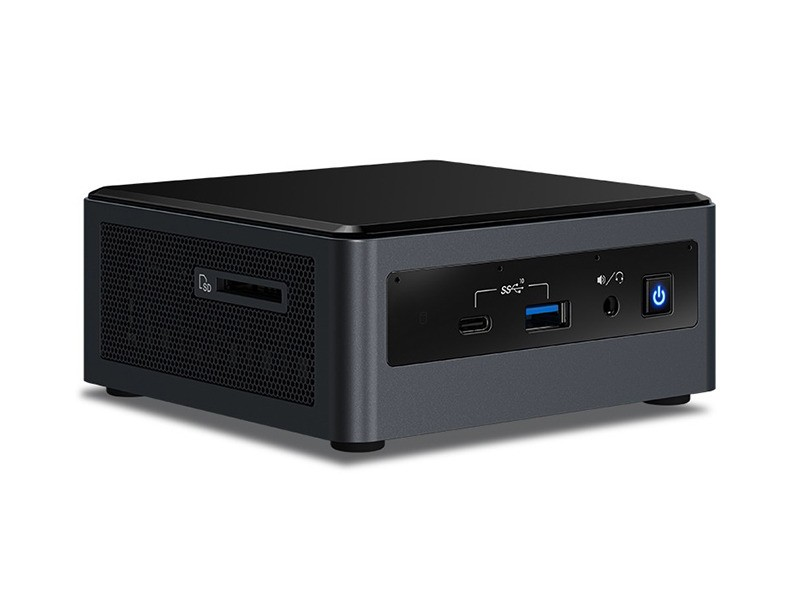
Rapid NUC iteration accelerated adoption:
-
2014 Ivy Bridge: Thunderbolt support enhanced expansion.
-
2015 Skylake 14nm: Performance and power efficiency leap.
-
2018 Coffee Lake: Core i7 brings light gaming & content creation.
Chinese brands—Minisforum, GMKtec, and others—followed with affordable NUC-style systems under RMB ¥2,000, igniting the domestic mini-PC market.
5. The AI Computing Revolution (2019–Present): Mini PCs Enter the AI Era
From 2019 onward, the rise of AI—and the rise of Chinese manufacturers—transformed mini PCs into high-performance computing platforms.
2024 marked a decisive shift:
-
Apple Mac mini M4 introduced hardware-accelerated ray tracing.
-
GMKtec EVO-X2 debuted as an AI-ready desktop supercomputer.
-
NVIDIA DGX Spark is aimed at professional developers and AI labs.
In 2025, mini PCs evolved from productivity boxes into AI inference engines, with computing power previously limited to data centers now delivered on the desktop.
6. DGX Spark vs. GMKtec EVO-X2: A New Generation of Desktop AI Supercomputers
Two products represent the peak of local AI computing today—each with distinct philosophies:
NVIDIA DGX Spark
-
Grace Blackwell GB10
-
FP4 performance up to 1 PFLOP
-
Linux-based DGX OS
-
Professional-grade AI workflows
GMKtec EVO-X2
-
Ryzen AI Max+ 395
-
16-core Zen5 + RDNA3.5 + XDNA2
-
126 TOPS NPU
-
Windows + Linux dual-system
-
Consumer-friendly pricing
When unified memory meets tri-chip heterogeneous compute, the desktop AI race enters a brand-new era.
Core Specifications Overview
| Specification | NVIDIA DGX Spark | GMKtec EVO-X2 |
|---|---|---|
| Processor | Grace Blackwell GB10 | Ryzen AI Max+ 395 |
| Compute | FP4 1 PFLOP | 126 TOPS NPU |
| Memory | 128GB LPDDR5X | 128GB LPDDR5X |
| Storage | 1TB / 4TB | 2TB (up to 16TB) |
| Power | 170–240W | 140W peak |
| Price | ~¥28,917 RMB | ¥14,999 RMB |
AI Performance: Real-World Tests Tell a Different Story
Despite NVIDIA’s theoretical hardware advantage, real-world testing reveals surprising results.
YouTube tech analyst Bijan Bowen compared both platforms under identical conditions:
-
Llama 3.3 70B
-
AMD Ryzen AI Max+ 395: 4.9 tokens/s
-
NVIDIA DGX Spark: 4.67 tokens/s
-
-
GPT-OSS 20B
-
AMD: 64.69 tokens/s
-
NVIDIA: 60.33 tokens/s
-
-
Qwen3 Coder 30B
-
DGX Spark slightly leads
-
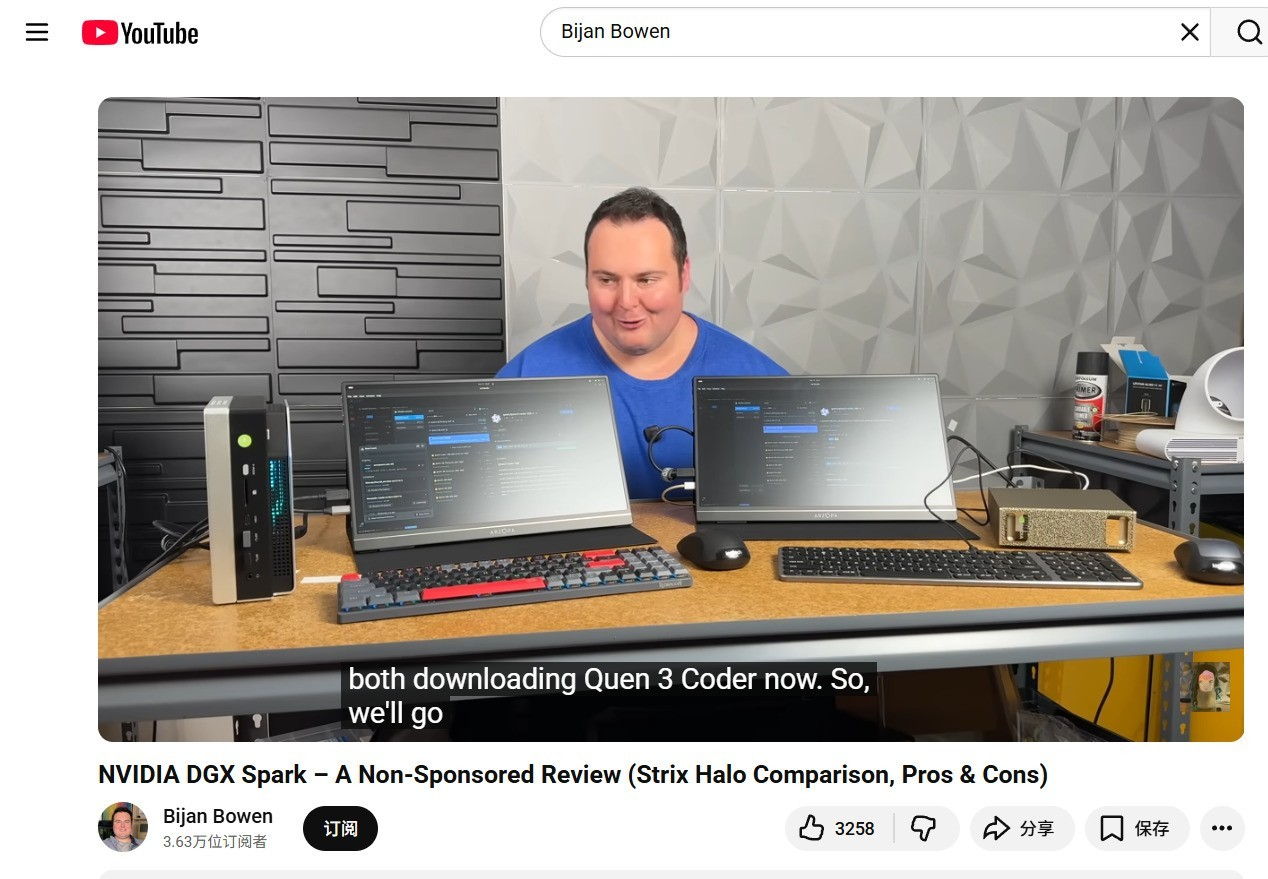
These results show that AMD’s unified memory design and flexible allocation deliver smoother and faster local inference under realistic workloads.
NVIDIA’s LPDDR5X memory configuration—limited to 273–301 GB/s—cannot match the HBM bandwidth of its larger GB200/GB300 chips, creating a performance bottleneck for DGX Spark.
Which One Should You Choose?
Choose GMKtec EVO-X2 if you are:
✔ Local AI developers deploying 70B–235B models
✔ Creators needing strong GPU + NPU performance
✔ Small teams seeking private on-prem AI workloads
✔ Users wanting Windows compatibility & affordability
DGX Spark is ideal only if:
✔ You run models with over 200B parameters
✔ You need ARM-based DGX ecosystem compatibility
✔ Budget is not a concern
Cost-Performance Verdict:
GMKtec EVO-X2 delivers 80%+ of the performance at 52% of the price, making it the most pragmatic choice for developers, studios, and AI enthusiasts.
Looking Forward: EVO-T2 and the Rise of 18A-Era Desktop AI
In 2025, GMKtec will debut the EVO-T2, powered by Intel’s 18A process and Core Ultra 388 processor, delivering:
-
180 TOPS AI compute
-
128GB LPDDR5X
-
16TB storage expansion
-
Release planned for Q1 2026
From the 2,300 transistors of the Intel 4004 to trillion-transistor AI platforms, mini computers have spent 50 years proving a single truth:
The future of computing is small form factor—massive compute density.
GMKtec now ships products to over 70+ countries, topping the mini-computer rankings on Amazon Japan and Amazon US. Chinese innovation is accelerating the global shift toward desktop AI supercomputing.
Source:


